
This Idea Will Make You Unstoppable
The Winner Effect

Do you feel like you’re winning?
Or do you feel like you’re wasting your potential?
Either way, the science behind “winning” is both fascinating and scary.
Here is the Winner Effect:
What Is the Winner Effect?
In a scientific study, they let two mice fight each other.
They drug the first mouse (mouse A) so it’s guaranteed to win against the other one (mouse B). Then, they make mouse A fight against another one (mouse C), but this time they don’t drug it.
It still has a much higher probability of winning because it has more confidence, more testosterone, and more wins under its belt, which helps the mouse win again and again.
This is a cycle that happens everywhere in life:
The more you win, the more likely you are to win.
You see this with billionaires who keep getting richer, athletes who keep winning, and even sports fans’ testosterone increases after a win (even if they did nothing).
Winning changes your biochemistry to win again.
But on the flip side, the same thing happens when you lose.
If things aren’t working out, you feel stuck, you run out of confidence, and self-doubt starts creeping in. You feel like you’re losing, so it makes you lose again, which makes you feel worse, and downward you go in a vicious spiral.
Ask yourself: “Where is my current momentum leading me?”
I asked this myself a few months ago.
My two big passions in life are fitness and self-improvement. I love to train, to feel and look good, to meditate, to read, to write, and to explore flow state.
But a few months ago, I noticed I was drifting away. I was starting to skip workout after workout, eating more junk food than usual, scrolling my phone for hours a day, and reading less and less.
As a result, my physique and my ability to enter flow state got worse and worse. I couldn’t focus on anything or be consistent. It felt bad, but the more I did it, the more I felt drawn to the very activities that were causing it.
Then, my life changed.
In the last 4 months, I’ve been the most consistent version of myself of the last 5 years:
I worked out every day, skipping only the days when I had my armwrestling practice and one day in which I did some home renovation that took until 11 pm.
I hit my macros and calorie target every single day.
I read more books in those past months than in the last 2 years.
I spent 60–90 minutes a day in flow state writing every single day.
Overall, my life changed. And that’s all thanks to the Winner Effect. Because once you start winning, winning becomes easier and easier.
This is how you access it (according to science).
How To Unlock The Winner Effect
Even if you have no track record of success, you can still access the Winner Effect, because it’s all about perception.
The truth is, you already have wins: you just need to acknowledge them.
Step 1: Find Your Wins
Reflect back on the past year: what wins did you get?
Small or big, it doesn’t matter: list out all the wins from the past year.
A common objection I get is: “But I don’t have any wins!”
To that, I always reply: “Did you get up this morning?”
“Did you get dressed?”
“Did you open up the computer?”
It’s small evidence, but it’s enough evidence to claim that you have some wins.
The magical part about it is that the more you list out, the more wins come to mind. You only need to get the momentum rolling.
Just start with the smallest wins you can think about.
Did you know that only 5% of people wash their hands correctly? Doing it for the full 20 seconds (enough time to hum “Happy Birthday” twice) is the single most effective way to prevent the spread of respiratory and diarrheal infections.
Wash your hands correctly now, and you already have 1 win against 95% of the world population. That’s the equivalent of winning against 7,851,750,000 people. Do it now.
Step 2: Reward Effort, Not Outcomes
If you set a goal of losing 10 pounds in 3 months, you could hit your goal but still not be satisfied.
If you set a goal of gaining 500 subscribers in 6 months, you could hit the target but still not be satisfied.
What you need to do is set goals that allow you to fall in love with the process and focus on what you can control.
You can’t control how many people will like your writing or how much weight you will lose. These are all somewhat governed, or at least influenced, by outside factors.
What you can control is how much time you will write per week and how focused you will be in each writing session. What kind of food you will eat and how many times a week you will exercise.
The trick is defining for yourself: “What do I consider a win that is in my control?”
Studies show that kids who are rewarded for being hard workers always outperform kids who are rewarded for being smart by a large margin in any difficult task.
Reward yourself for the effort and the consistency, not the results.
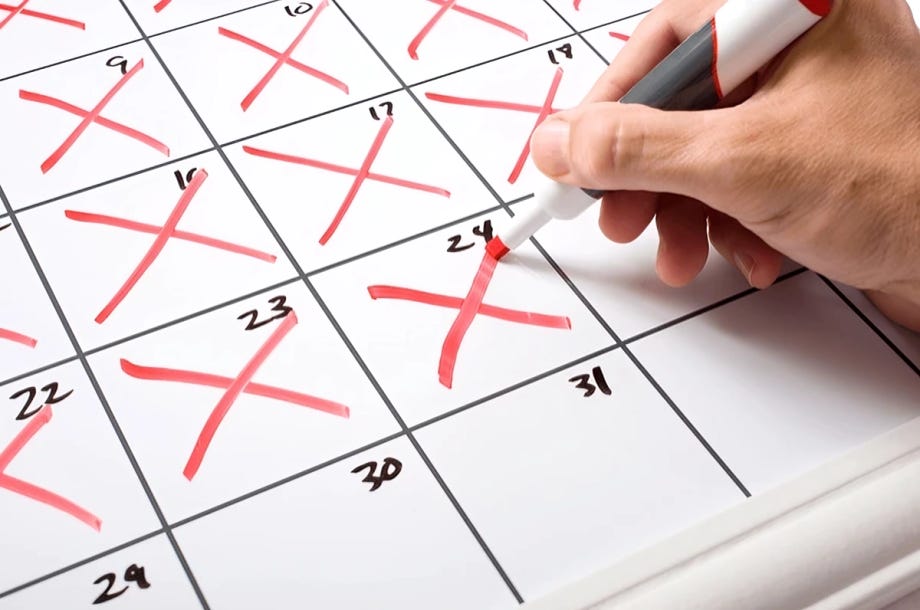
Step 3: Get As Many Early Wins As Possible
Tim Ferriss said in an interview:
“In order to learn something fast and really well, you have to have early wins. It increases dopamine, confidence, testosterone, and you are more motivated to practice more, you have more resilience, and are more likely to master that topic.”
Most meaningful things are difficult to learn and get better at.
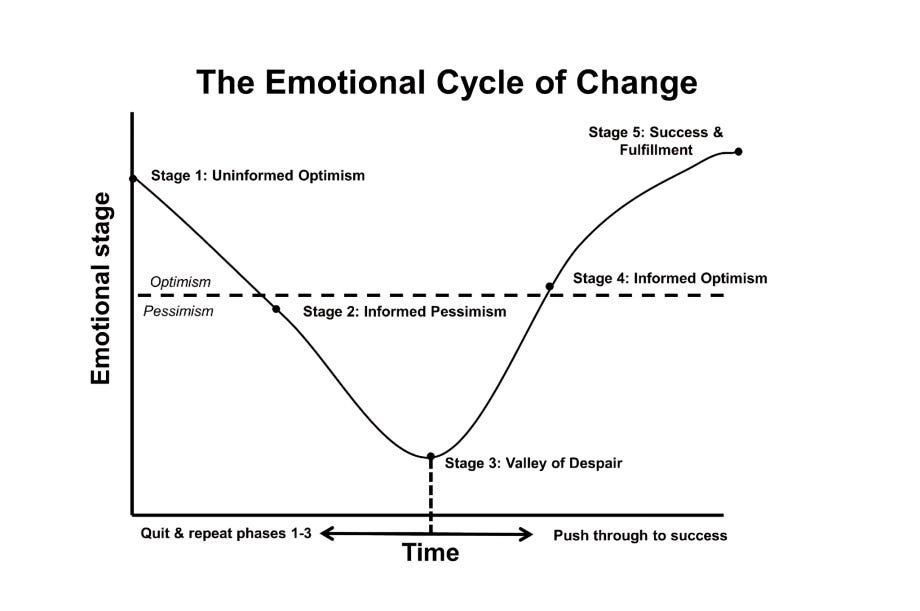
Tough times will come.
Whether you want to lose weight, write a best-selling book, or become a professional athlete, you will have to overcome the “Valley of Despair.”
When you feel stuck, nothing is working, and you’re on the verge of quitting, having early wins is the difference between reaching the top or dropping out altogether. Big goals can be daunting. So start with easy, early wins, then stack them up later.
Writing a book is a hard task. Writing 1 page a day is doable for almost anyone and will give you the confidence you need to keep going.
So if you’re stuck in a rut, just get up before noon and wash your hands for 20 seconds. Congrats, you’ve already beaten billions of people. Now, build from there.
Start small, then stack win after win.
Step 4: Protect Your Word At All Costs
Whenever you make a promise but don’t keep it, you lose trust in yourself and your word.
If you don’t trust your own word, you’ve lost the most important relationship you have.
“How much do you currently trust your own word?”
When you tell yourself something, is it set in stone, or do excuses always come up sooner or later?
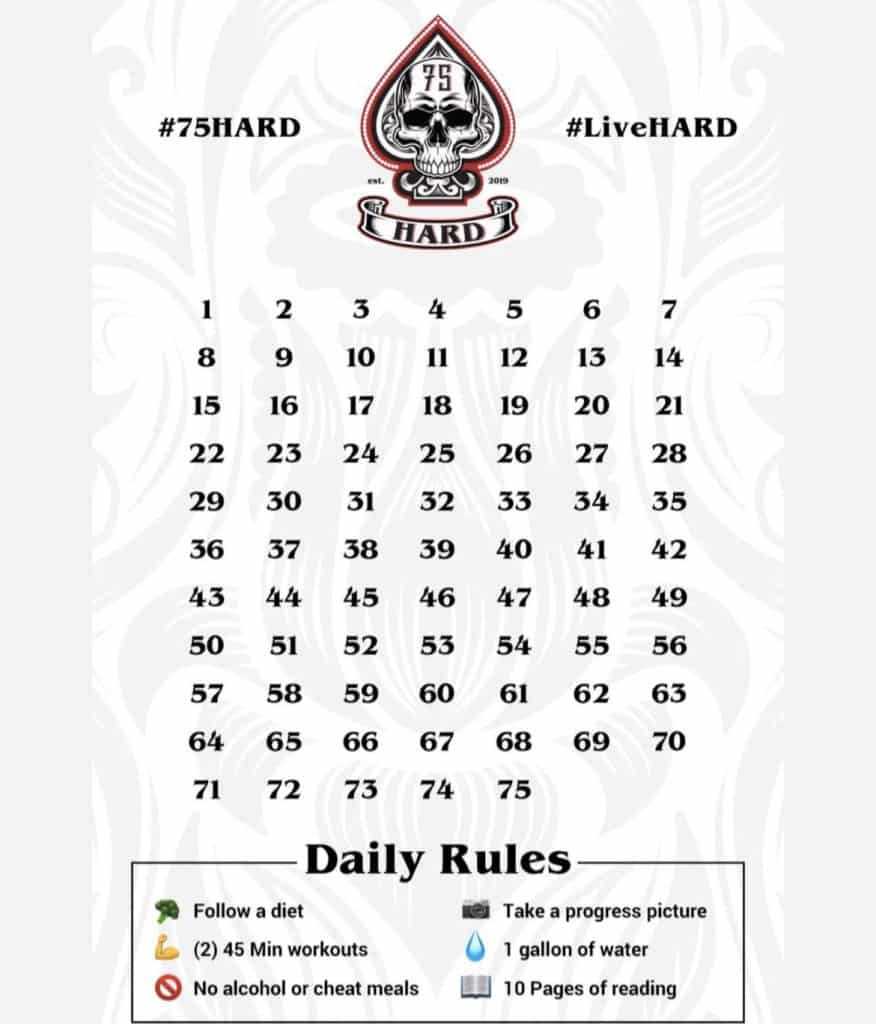
The goal of a challenge like 75 Hard is not to lose weight or build a healthy lifestyle (although that’s a nice bonus).
It’s to make a commitment to something that sucks and keep your word, staying consistent even when you want to quit.
For those interested, this is the 75 Hard challenge:
Winners always keep their promises. No matter how big or seemingly insignificant they are.
Step 5: Don’t Think You’re Losing When You’re Actually Winning
If you’ve ever tried meditation, you’ll understand this very well.
The goal of meditation is generally to sit down, eyes closed, and focus on your breath.
But if you’ve ever done it, you know that your brain doesn’t like to just sit and focus on one thing for 10 minutes straight. It will likely drift away into some unrelated thoughts, and you’ll get distracted.
At this point, most people quit.
They think they’ve failed, but this is the whole point of meditation.
It’s not to sit still. It’s to get distracted—so you can refocus your attention back on the breath. The more you do it, the better you get at it. It’s skill acquisition. That way, when in normal life you want to focus on your work, on your meal, or on what the other person is saying, and you get distracted, you have the power to refocus on the object of your attention.
You could sit for 10 minutes, get distracted 26 times, refocus on the breath, and think you’re losing because you can’t “sit still.”
You’re winning. But you think you’re actually losing. All because of your expectations.
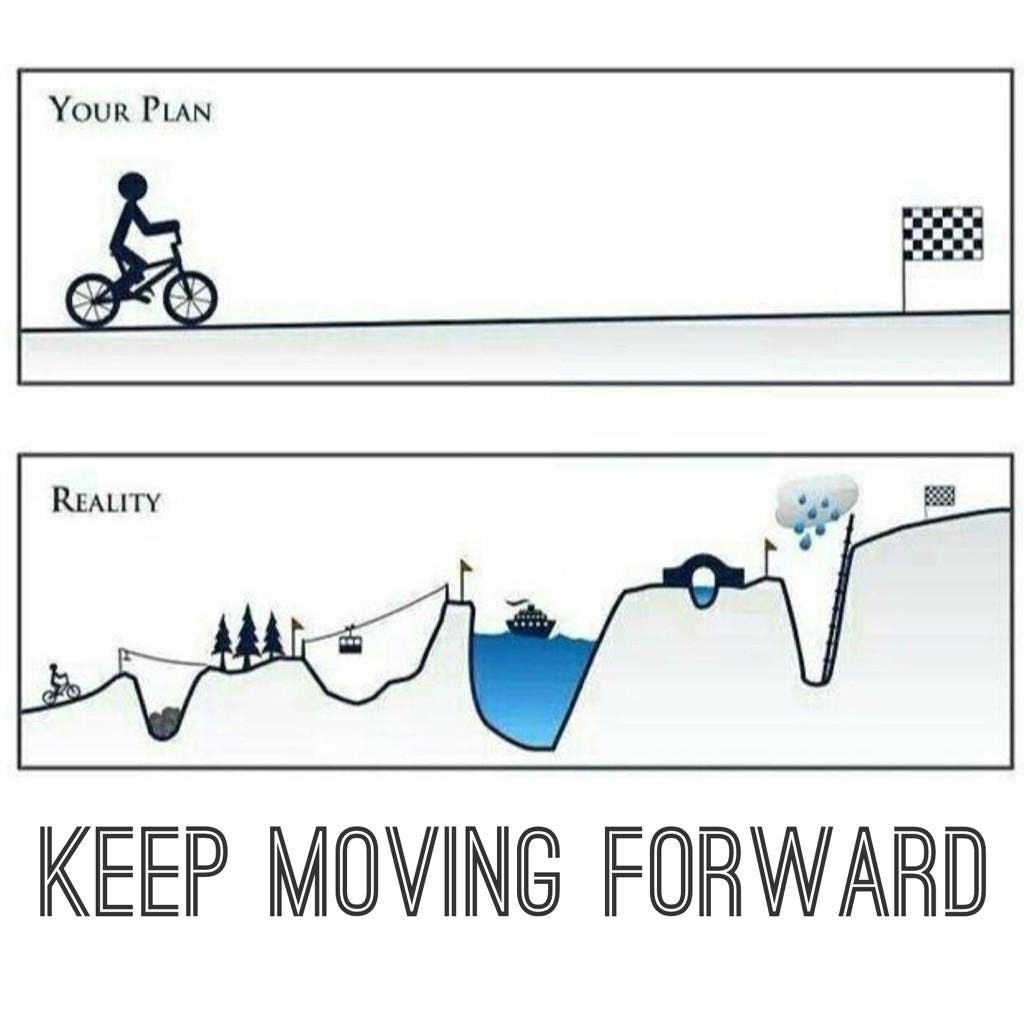
Nothing good to accomplish will ever be linear. Some workouts will suck. Some essays will flop. Some mediations you will get distracted every 5 seconds. That’s normal. A lot of problems are problems just because we think are problems.
Adjust your expectations.
Step 6: Brainwash Yourself To Win
This last one is the most powerful tool you can use to tap into the Winner Effect at will.
It’s used by soldiers, olympic athletes, and winners in all camps. And it’s all based on one simple concept: your brain doesn’t realize the difference between what’s real and what’s imagined. Especially if you put your deepest emotions behind the imagination. I’m talking about “visualization”.
Visualization is the most powerful habit in the world.
But everyone misses the point of visualization.
It’s not about manifesting “abundance”, health, or anything else like that and get it magically delivered to you. Instead, it’s about visualizing the life you want to live and the life you DON’T want to live with so much intensity and clarity that you can’t help but feel a drive inside of you to win.
As anything else, you’ll get better the more you do it.
The images will become more vivid. You’ll feel deep emotions inside of you.
I can now bring to myself tears while doing my visaulizations practices. For me, the best time to do them is when I’m in bed at night. I usually lie down for 10-15 minutes, visualizing my dream life, almost as I am living it.
It works not because of some “Law of Attraction” kind of stuff.
It works because it builds confidence and certainty.
It keeps you focused on what you want to do and achieve. It keeps you consistent when you want to quit. It keeps you tryng new stuff when you’ve already failed dozens of times. It keeps the fire burning inside of you.
If you visualized your future wins NOW with so much intensity that they bring you tears and so much clarity that you KNOW you’ll get there, how would you feel?
Exactly. Like a Winner.
And that’s all that the Winner Effect is all about.
Feel like a winner. Then, go win.